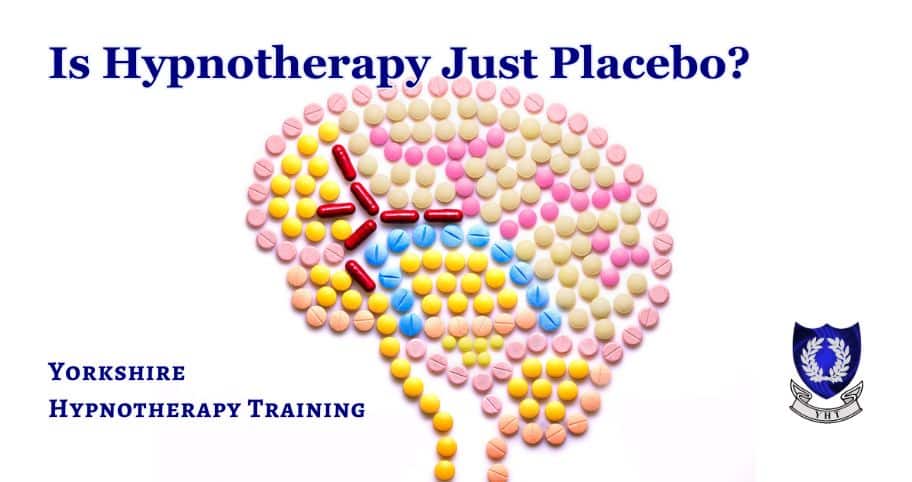
In my 20-plus years as a hypnotherapist, I think I’ve heard all of the jokes, misconceptions and strange ideas people have about hypnosis. One comment that comes up a lot is: “It’s just a placebo.” The implication is that hypnosis doesn’t really work because placebo effects are somehow fake or unimportant. In reality, that’s unfair to both hypnosis and the placebo effect.
In this article
- What is the placebo effect?
- Why is “just a placebo” misleading?
- Nocebo
- Comparison of hypnosis and placebo
- Ethical considerations in hypnosis and placebo research
- Long term effects of placebo and hypnosis
Modern research into hypnosis and placebo responses suggests that they can both produce genuine psychological and physiological changes.
What is Placebo Effect?
This is a blog for hypnotherapists, so I’m going to assume that you know at least a bit about what hypnosis is. If not, have a look at my article on neuroscience and hypnosis. But I will start with a look at the placebo effect.
Placebos are treatments that shouldn’t have any effect because they have no active ingredients. But they do, because our minds make them effective via the power of suggestion. An example would be giving someone a sugar or starch pill with no active ingredients and telling them it was for headaches. If their headache goes away, that’s due to the placebo effect. The word “placebo” means “I will please” in Latin and refers to this positive psychological effect.
Why “Just a Placebo” Is Misleading
Placebos are often dismissed as being for placating hypochondriacs. However, multiple studies have demonstrated that placebos have an measurable effect. When researchers test new medications, they compare them with both a control group (who receive no treatment) and a placebo group (who, obviously enough, receive placebo treatments). Comparing the new medication to both groups tells researchers how effective it is.
Placebos tend to work best on self-observed symptoms and mental health conditions, rather than physical conditions. For example, a placebo is unlikely to make a cancer tumour disappear, but it can reduce the associated pain. It can also alleviate the fear of the illness worsening, and lessen the side effects of chemotherapy. The benefits of these effects are really important.
Reductions in pain, anxiety or depression can lower blood pressure and stress hormone levels, which in turn improve the patient’s immune response. This can also help them adopt a healthier mindset, making it easier for them to care for themselves and follow doctors’ instructions, thus leading to a sort of domino effect towards recovery. (Better Health, 2021).
Sign up for YHT's Newsletter: tips, research, articles and training discounts
In most cases, the person receiving the placebo isn’t aware that’s what they’re getting, in case it reduces their belief in the treatment. However, some studies have shown that placebo treatments work even when the patients know they are receiving a placebo. (Marshall, 2016). How this works is not very clear but, probably, renewed hope and the feeling that they are taking steps towards dealing with their illness, cause a reduction in stress and an increase in endorphins, which are natural painkillers and stress reducers.
The Nocebo Effect
We need to be careful when using placebos, because of the “nocebo” effect. This is when negative symptoms appear with no physical cause. If a patient is warned to expect side effects, for example, they may spontaneously develop them in response to the suggestion.
Comparing Hypnosis and Placebo
There are misconceptions about how both hypnosis and placebos work; but, as above, both have real, noticeable benefits in the treatment of a variety of conditions.
Both work with the power of suggestion and affect the mind rather than having direct physical effects on the body. By changing someone’s expectations, they change the outcome. Responding to hypnosis or a placebo doesn’t mean you are weak-willed or gullible; they can both work on anyone.
However, there are differences. As I’ve mentioned, placebo is typically presented deceptively; the person receiving it usually believes it is an effective remedy. Hypnosis, on the other hand, arguably works best when presented honestly and when the hypnotherapist and client are working together towards the goals.
Ethical Considerations in Hypnosis and Placebo Use
Whether you are using either hypnosis or placebos, ethics are important.
As hypnotherapists, we work transparently with clients and obtain informed consent. Clients should be fully aware of the process and have realistic expectations of how we can help them.
Traditionally, placebos are delivered with a built-in level of deception. The client or patient can’t give informed consent because they don’t have all the facts. My article on Mood Freezing will show you a real life example of this.
Researchers defend the deception by arguing that the placebo works better that way—broadly speaking, the end justifies the means. But it is often difficult to draw an ethical line between achieving the best results for your patient or client and being honest with them.

Long-term Effects of Hypnosis and Placebo
It’s also worth looking at the issue of whether hypnosis and placebo have a comparable effect over the longer term.
Although both rely on suggestion, studies show only a weak link between responsiveness to the placebo effect and to hypnosis. (APA, 2025). Hypnotic suggestion tends to offer more stable and consistent results than placebo.
So, while placebos are good for short-term relief, this might not be true over longer periods because they address only symptoms and not any underlying issues. Hypnotherapy tends to have better long-term outcomes.
For therapists, the important question is not whether hypnosis and placebo overlap, but how we can use our understanding of expectation, communication and therapeutic relationships ethically and effectively to support clients.
References:
Apa.org. (2025). APA PsycNet. [online] Available at: https://psycnet.apa.org/record/2016-41344-073. [Accessed Nay 12 2026]
Better Health Channel (2021). Placebo Effect. [online] Vic.gov.au. Available at: https://www.betterhealth.vic.gov.au/health/conditionsandtreatments/placebo-effect. [Accessed Nay 12 2026]
Marshall, M. (2016). A placebo can work even when you know it’s a placebo – Harvard Health Blog. [online] Harvard Health Blog. Available at: https://www.health.harvard.edu/blog/placebo-can-work-even-know-placebo-201607079926. [Accessed Nay 12 2026]

About Debbie Waller
Blog Author Debbie Waller is a hypnotherapist, supervisor, and trainer with more than twenty years of experience. As well as having a busy client practice, she runs Yorkshire Hypnotherapy Training and writes books and articles for therapists who want to deepen their knowledge and develop effective practice.
Disclaimer
The information and ideas shared on this blog are based on the author’s professional experience, research, and training. They are intended for educational purposes and to support reflection and professional development. Therapists should always apply their own professional judgment and consider the needs of individual clients when using any techniques or suggestions discussed here.
While every effort is made to ensure the information is accurate and helpful, no responsibility can be accepted for any loss, damage, or difficulties arising from the use or misuse of material contained in these articles.