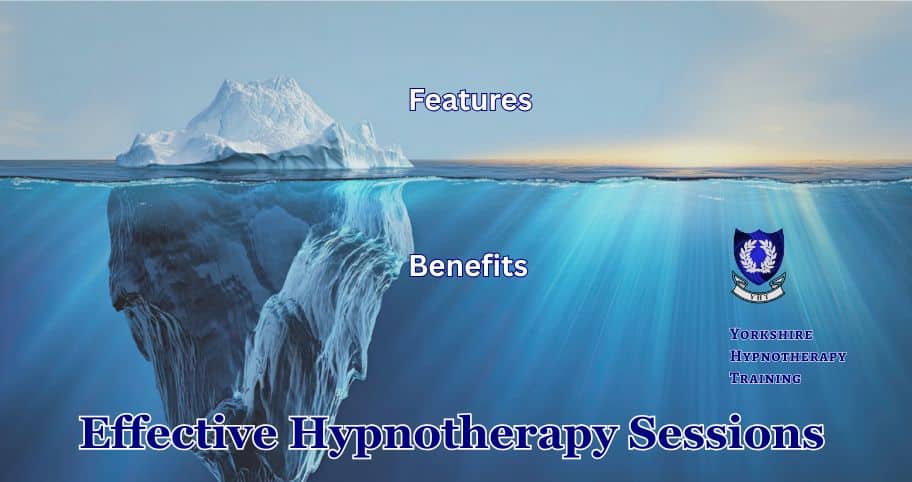
One of the keys to creating effective hypnotherapy sessions is understanding client motivation. There is, of course, the reason they tell you they want to achieve their goal. But there may be something deeper, possibly unconscious, that’s even more important. This is where benefits and features come in. And one of the best ways to explore it is by using this metaphor about Homer Simpson.
Yes, Homer Simpson, that doughnut-loving chap from Springfield, can help you make personalised hypnotic suggestions and therapeutic metaphors! The reason is a story of my husband’s, which I’m borrowing. He uses it when he’s giving lectures on change management to business managers.
Over the years, we’ve come to realise that the work we do is actually very similar. We both have to get people motivated to face big changes. And we want them to stick with those changes even when it’s not as easy as they’d hoped. Motivating clients all comes down to benefits and features.
The Metaphor
‘My car is a white Vauxhall*, exactly the type used by the Police to catch people speeding on the motorway. When people see me behind them, they assume I am driving a police car (the roof-rack helps…). They slow down and get out of my way. The result of this is that I travel a bit quicker than everyone else in the rush hour, and get home in time to watch The Simpsons on TV with my kids.’
Sign up for YHT's Newsletter: tips, research, articles and training discounts
Effective Hypnotherapy Using Benefits and Features
Broadly, a benefit is what the customer or client gets out of making a change. Features are how you get to the benefits.
In the story, the feature of the car that’s important is that it looks like a Police car. By taking advantage of this feature, Dave gets the benefit he wants. (To enjoy his favourite TV programme with the kids.)
If I were writing an ad for this car, what would I focus on? ‘Buy this, it looks like a Police car’, or ‘Buy this and get home in time to watch The Simpsons’? I hope you recognised that the second one is more powerful. In just the same way, the benefits, not the features, are what you need to create the most powerful personalised suggestions for effective hypnotherapy sessions.
Say you have a client who wants to quit smoking. You ask, ‘How do you see yourself as a non-smoker?’. The client might say, ‘Healthier, with more money in my pocket’. You could certainly include those things in your session, but before you do, have a closer look. They are all features, not benefits.
As an example, most people would agree that having a bit more money would be a good thing, but why? It’s unlikely that you just like having your pockets filled with heavy coins. More probable that you have ideas about what you could spend it on. Things that you can’t afford now.
Having more money is a feature of a life without cigarettes. The benefits are what you could do with it.
So, when creating your session content, which of these would be the more motivating hypnotic suggestion?
- imagine yourself with more money in your pocket at the end of the week
- imagine yourself setting off on that wonderful holiday that you couldn’t afford before

Do Features always have Benefits?
Not really. There is a second part to the car story. It goes like this.
‘My wife doesn’t like The Simpsons. She would rather spend longer in traffic, listening to her favourite audiobook, than get home to a house filled with Simpsons fans laughing at something she doesn’t find funny.’
Dave’s big benefit, which is getting home earlier, isn’t a benefit to me at all. Quite the opposite. (Sometimes these get called dis-benefits in ‘management speak’.)
In the same way, saving money is likely to be a feature for everyone who quits smoking. But it may not always have any relevant benefits. What if your client is a millionaire? Or they spend only a few quid a week on roll-ups, and the savings won’t be noticeable?
In this case, you would need to explore the other features they’ve mentioned and find the benefits there. If they were healthier, what would they be able to do that they can’t do now? How would it affect their well-being?
What Are Relevant Benefits?
In therapeutic terms, a benefit might be something concrete, like affording a holiday. Or something emotional, like a feeling of pride or freedom. When you are talking to your client about why they want to change, it’s your job to find this out. To create really effective hypnotherapy sessions, make sure you drill down past the obvious and get to what’s really important.
Learning to uncover what really matters to a client is one of the most valuable skills a therapist can develop. If you’d like to explore this in more depth, my book Their Worlds, Your Words, looks at how to use a client’s own language, interests, experiences and motivations to create highly personalised session content.
After all, the most powerful suggestions are often not the cleverest ones. They’re the ones that feel personally meaningful to the individual hearing them.
*Just to be clear, I am not encouraging people to impersonate a Police Officer, which is illegal! We have never actually owned a white Vauxhall (and even the Police prefer Day-Glo panels these days). It’s just a metaphor, although there is a grain of truth. I would rather listen to an audiobook than watch The Simpsons any day. Sorry, Simpsons fans.

About Debbie Waller
Blog Author Debbie Waller is a hypnotherapist, supervisor, and trainer with more than twenty years of experience. As well as having a busy client practice, she runs Yorkshire Hypnotherapy Training and writes books and articles for therapists who want to deepen their knowledge and develop effective practice.
Disclaimer
The information and ideas shared on this blog are based on the author’s professional experience, research, and training. They are intended for educational purposes and to support reflection and professional development. Therapists should always apply their own professional judgment and consider the needs of individual clients when using any techniques or suggestions discussed here.
While every effort is made to ensure the information is accurate and helpful, no responsibility can be accepted for any loss, damage, or difficulties arising from the use or misuse of material contained in these articles.