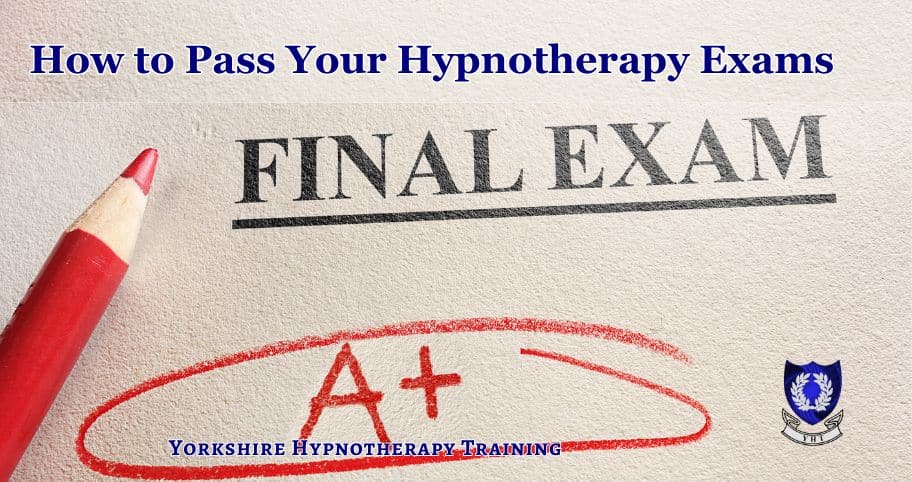
Preparing for hypnotherapy exams can feel daunting, especially if it’s been a while since you last studied. Knowing how to approach revision, organise your time, and apply what you’ve learned makes a big difference to your confidence. And your results.
Preparing for hypnotherapy exams can feel daunting, especially if it’s been a while since you last studied. Knowing how to approach revision, organise your time, and apply what you’ve learned makes a big difference to your confidence. And your results.
Do all Hypnotherapy Schools run Exams?
Until 2019, many hypnotherapy courses worked on a ‘continuous assessment’ principle. However, in that year a new version of the Training Standards came into force. This says that exams must be held. So some hypnotherapy students may be in territory they haven’t visited since school: faced with exams for the first time in years. This article will help you keep the exam nerves to a minimum and sail confidently through.
The Training Standards are part of a voluntary regulation system in the UK. Because they’re voluntary, some schools still choose to work outside their guidelines.
If you’re unfamiliar with the voluntary regulations, send for our free ebook called ‘How to be a hypnotherapist’ which explains it all.
However, all schools working with the latest version of the Training Standards are bound by their requirements, which have this to say:
[assessments should include] case studies …. plus coursework (which may include research, essays etc) and examination (practical and theoretical)’ [Paragraph 9.2]
The exact format of those exams is left to the individual schools to decide. But we all know that exam is a ‘four-letter word’, and can hike up your stress levels without much effort, whatever format the testing takes.
Stress and Hypnotherapy Exams
If you’ve been studying hypnotherapy, you’ll know quite a lot about the effects of stress and anxiety. Despite that, let’s do a brief recap here. You might experience:
- difficulties with executive functions (planning, decision-making, organisation etc)
- difficulties with concentrating, remembering and understanding information
- muscle tension and headaches
- sleep disturbances
- digestive system upsets
- irritability about things that normally wouldn’t normally bother you
- feelings of anxiety or panic (especially when you think about the exams)
- doubts about your ability to pass, general lack of confidence
As you will have been telling clients, this is due to the stress response, which developed to keep us safe from danger. Unfortunately, your brain classes exams as a danger. It reacts as it would to a man-eating tiger. Unfortunately, the most helpful response in an exam is pretty much the opposite of ‘fight or flight’. You need to be organised, calm, still, remember things, plan, and focus.
Sign up for YHT's Newsletter: tips, research, articles and training discounts
Exam Tips for Hypnotherapy Students
Your preparation will depend to some extent on the format your school has chosen to use for their exams. Ours, for example, are a practical hypnosis task with a partner, a multiple choice questionnaire and a viva voce. Even if your school’s choice is different, these ideas will get you started.
Before the exams
- Be proactive about your stress levels. Consider offering yourself as a case study (for stress generally or exam nerves) to another student in your class.
- Revisit your class notes and take some of the very good advice you would give a client!
- Look at all the elements of your lifestyle that can aggravate stress and anxiety. Check diet, smoking, alcohol, caffeine, exercise, self-care, etc. Make sure you are making the best decisions about them you can.
- Get the best night’s sleep you can, especially in the week or so before the event. Pulling an ‘all-nighter’ to re-read your notes the night before the exam is rarely the best approach!
- Organise a realistic revision and practice schedule which caters to your preferred ways of learning. Do you like to re-read your notes? Hear them (record them or try reading aloud)? Discuss topics with other students? Or get some extra hours in with practice clients to go through the techniques?
- Get someone to help you sort out this schedule if you’re struggling to do it yourself.
- Studying for around 30-45 minutes at a time is usually best. Then take a short break before getting back to it.
- Don’t go it alone. Find another student, friend or a family member who can use the notes to ask you questions. Or just offer morale-boosting support when you need it.
- Listen to relaxation audios! There are plenty of free ones about.
- Use affirmations, which will help shape your expectations into more positive thinking. Keep telling yourself that your trainers want to showcase your knowledge, not trick you into failing.
- Ask for a practice paper or past paper if one is available. If not, make sure that you know exactly what to expect and what will be required of you.
- Speak to your tutor for advice if you really feel you aren’t coping.
On the day of the exam
- Focus on being the best therapist you can be, don’t compare yourself with others.
- Arrive in good time, so you’re not flustered by rushing.
- Use the breathing exercises and other calming techniques you’ve been taught, before and during the exam.
- Pace yourself so you have time to answer all the questions.
- On written papers, read the questions carefully so you answer exactly what is being asked.
- If you find a question you don’t know the answer to, don’t panic, just move on. Answer the ones you know first. Then divide up whatever time you have left to deal with the trickier ones.
Facing exams for the first time in ages can be a daunting thought. But with a bit of planning and preparation, you can pass and even do well. Then you will be off on your new career. And probably before you know it, will be helping other people with their stress around exams!

About Debbie Waller
Blog Author Debbie Waller is a hypnotherapist, supervisor, and trainer with more than twenty years of experience. As well as having a busy client practice, she runs Yorkshire Hypnotherapy Training and writes books and articles for therapists who want to deepen their knowledge and develop effective practice.
Disclaimer
The information and ideas shared on this blog are based on the author’s professional experience, research, and training. They are intended for educational purposes and to support reflection and professional development. Therapists should always apply their own professional judgment and consider the needs of individual clients when using any techniques or suggestions discussed here.
While every effort is made to ensure the information is accurate and helpful, no responsibility can be accepted for any loss, damage, or difficulties arising from the use or misuse of material contained in these articles.